
Laos Travel Guide: 9 Experiences That Will Make You Slow Down and Stay Longer
Some countries make you want to see more. Laos makes you want to slow down.
It is easy to arrive in Laos with a Southeast Asia itinerary built for movement — a few nights here, a bus to the next town, a list of sights to tick off before the visa runs out. Laos resists that rhythm almost immediately. The Mekong moves at its own pace. Buddhist temples keep to their own quiet mornings. Mountain roads wind through villages that have no interest in being rushed past. Even the way people speak here, unhurried and warm, seems to ask visitors to do the same.
This guide is built around that idea. It is for travellers drawn to Mekong landscapes and misty mountains, to Buddhist culture and everyday village life, to temples, rivers and countryside rather than a checklist of attractions. Laos rewards people who leave space in their plans — for a slow breakfast in Luang Prabang, an unplanned stop along a mountain road, or an afternoon that simply drifts. What follows is a practical, experience-led guide to help you plan that kind of journey.
Laos at a Glance
| What to know | Details |
|---|---|
| Best time to visit | Broadly November to February for the coolest, driest conditions; the wider dry season runs October to April (see the Best Time section below for the full picture) |
| Ideal duration | A comfortable first visit generally needs 7–8 days across Luang Prabang, Vang Vieng and Vientiane; shorter or longer trips are both possible depending on pace |
| Main gateways | Luang Prabang International Airport and Vientiane’s Wattay International Airport; there are no direct flights from India, so most journeys connect through a regional hub such as Bangkok |
| Popular destinations | Luang Prabang, Vang Vieng, Vientiane, the Mekong River, and the countryside and villages between them |
| Travel style | Slow travel suits Laos best — a small number of destinations experienced properly, rather than a packed multi-city itinerary |
| Best for | Culturally curious travellers, couples, photographers, and anyone who wants nature, temples and river landscapes without a fast-paced schedule |
| Currency | Lao Kip (LAK); US dollars and Thai baht are also widely accepted in tourist areas, though small purchases are usually easier in kip |
| Language | Lao is the official language; English is spoken in hotels, tour operations and many cafés in Luang Prabang, Vang Vieng and Vientiane, though less so in rural areas |
| Visa information | Indian citizens can generally obtain a visa on arrival at major airports and land borders, typically valid for around 30 days; requirements can change, so this should always be confirmed with official sources close to your travel dates |
Why Laos Is Different from Other Southeast Asian Destinations
Laos does not compete with its neighbours on scale. It has fewer mega-cities, fewer headline attractions crowded onto a single itinerary, and a noticeably slower pace of daily life. That is precisely what sets it apart.
Much of the country’s character comes from the Mekong, which shapes both geography and daily rhythm — fishing boats, riverside markets, and towns that face the water rather than turn away from it. Buddhist culture is not staged for visitors here; saffron-robed monks, working monasteries and early-morning rituals are simply part of how towns like Luang Prabang function. Beyond the towns, the landscape shifts quickly into mountains, limestone karsts and countryside, with villages that go about their own routines whether or not a traveller happens to pass through.
The result is a country that combines genuine adventure — rivers, caves, mountain roads, trekking — with long stretches of tranquillity most travellers do not expect. Laos rarely feels like it is performing for tourism. It feels like a place that has kept its own pace, and simply allows visitors to join it for a while.
9 Experiences That Make a Laos Journey Special
1. Wake Up Slowly in Luang Prabang
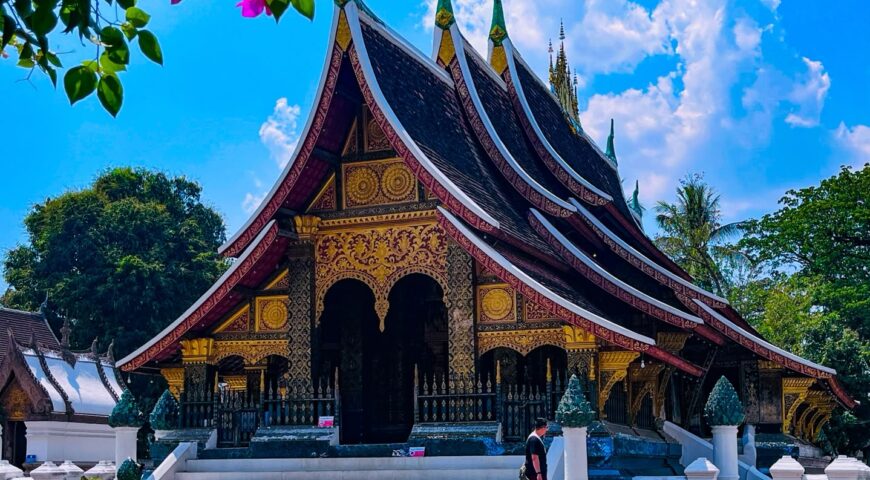
Luang Prabang is best experienced in the early hours, before the heat sets in and before the day fills up. The Old Town’s low wooden buildings, gilded temple roofs and narrow lanes are made for walking rather than for a checklist of sights. Wat Xieng Thong and the other temples along the peninsula reward an unhurried visit — sitting for a while rather than moving straight to the next one.
The town’s rhythm is easy to fall into: a coffee at a café overlooking the Mekong or the Nam Khan, a walk with no fixed destination, the daily market as it sets up and winds down. Luang Prabang rewards travellers who give it mornings and evenings, not just an afternoon between bus connections.
2. Experience the Mekong at a Slower Pace
The Mekong is not just scenery in Laos — it is a working river, and travelling along even a short stretch of it changes how the landscape feels. Slow boat journeys, where currently available and seasonally appropriate, move at a pace that lets riverside villages, fishing activity and changing light actually register, rather than blurring past a bus window.
Boat conditions and river levels vary significantly by season, so it is worth checking current operators and river conditions locally rather than assuming year-round availability. Even a shorter river excursion near Luang Prabang gives a genuine sense of why the Mekong sits at the centre of so much of Laos’s daily life.
3. Discover the Waterfalls Around Luang Prabang
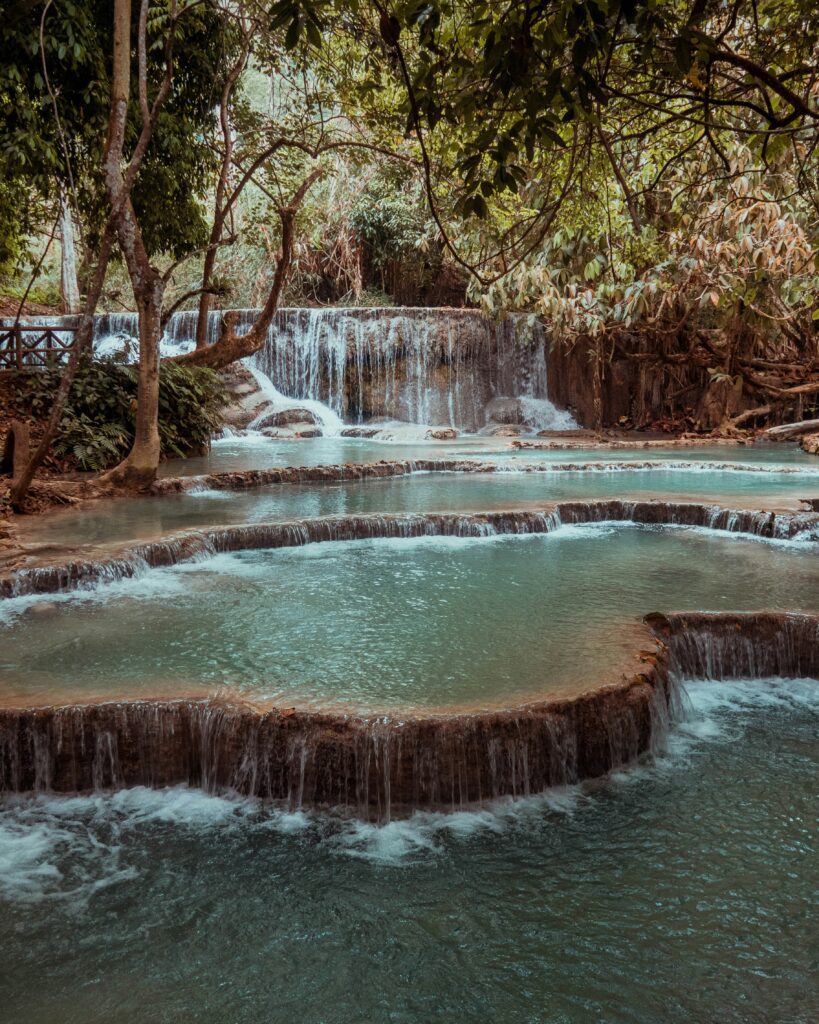
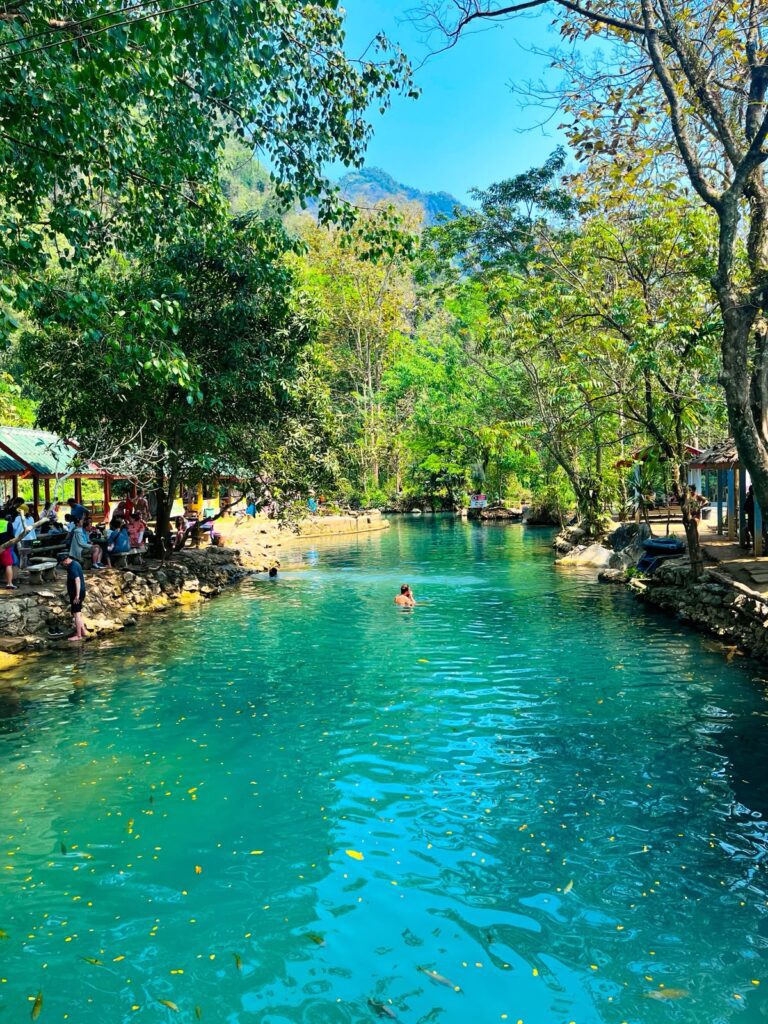
Kuang Si Falls, with its turquoise pools cascading through limestone terraces, is the best known of the waterfalls near Luang Prabang, and deservedly so. But its real value is less about the photograph and more about the walk to reach it, the surrounding forest, and the option to sit beside a quieter pool away from the main crowds rather than rushing back to the van.
Water levels and colour vary with the season — fullest and often most vivid in the months after the rains, quieter and lower during the driest stretch of the year. Either way, the falls are worth building unhurried time around, not just a brief stop on a group itinerary.
4. Experience the Mountains and Adventure of Vang Vieng
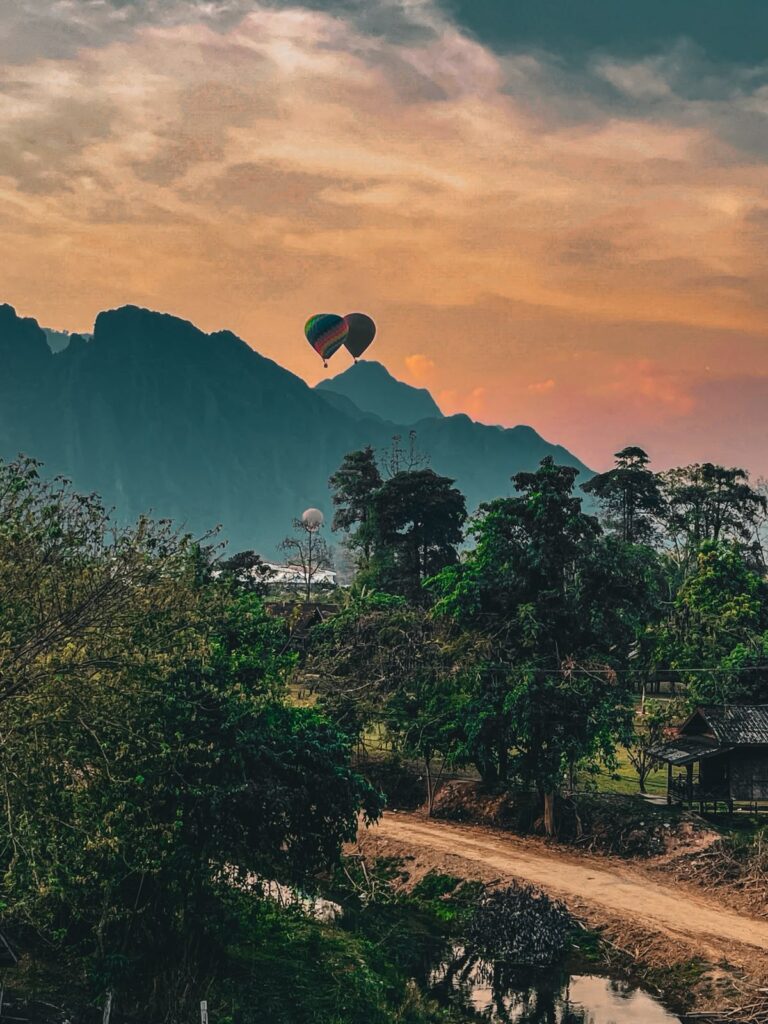
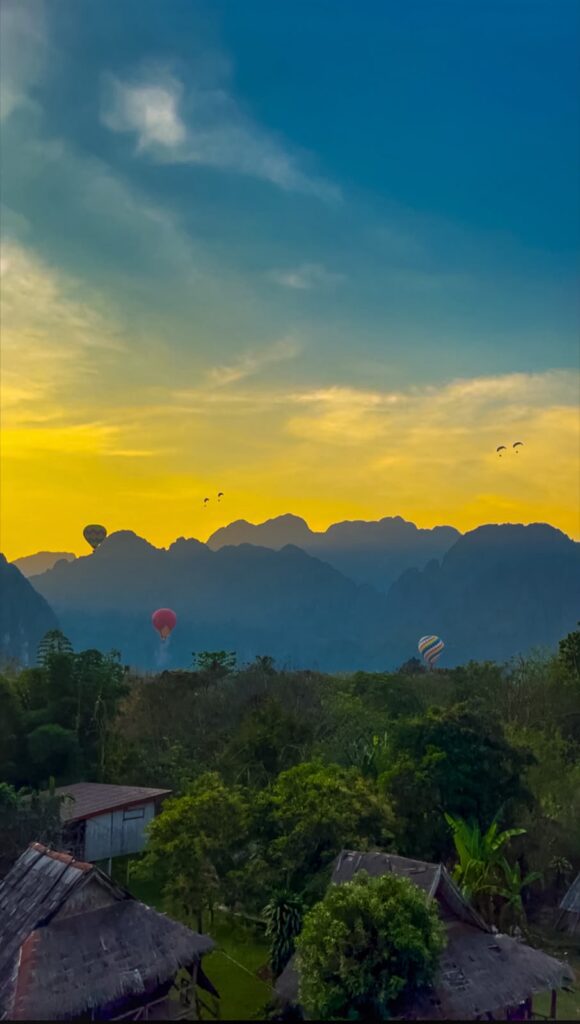
Vang Vieng’s limestone karst landscape is dramatic in a way that photographs never quite capture — towering rock formations rising out of flat rice fields, with caves threaded through the hills and the Nam Song River running below. The area has shifted over the years from a party-town reputation toward a genuine outdoor destination, with caving, viewpoints, kayaking and tubing among the activities on offer, availability and conditions permitting.
Activity levels vary by operator and season, and not every experience will suit every traveller, so it is worth choosing based on current conditions and personal comfort rather than assuming everything is available or advisable on any given day. What Vang Vieng offers well is a genuine mix: real adventure by day, and a noticeably slower, quieter atmosphere once the light starts to fade over the karsts.
5. Spend Time Along the Nam Song River
Away from the specific activities on offer, the Nam Song River itself is worth simply sitting beside. Riverside restaurants and guesthouses look directly onto the karst landscape, and watching the light change over the limestone hills in the late afternoon is its own kind of experience, independent of any activity booked for the day.
This is where Vang Vieng’s slower side shows itself — travellers who build in unstructured river time alongside the adventure activities tend to come away with a fuller sense of the place.
6. Discover Laos Beyond Its Major Towns
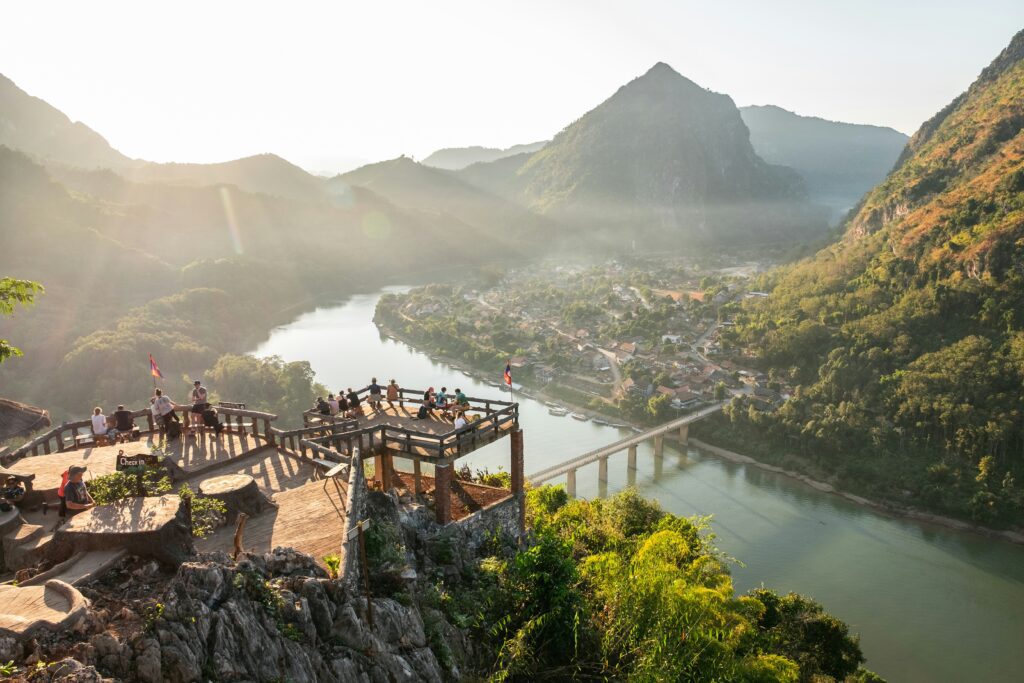
Between Luang Prabang, Vang Vieng and Vientiane, the roads pass through countryside that rarely makes it onto a fixed itinerary — small villages, rice terraces, markets serving local rather than tourist needs, and landscapes that shift from river valley to mountain and back. These in-between stretches are not detours from the “real” trip; for many travellers, they end up being some of the most memorable parts of it.
Village life in Laos continues whether or not travellers are passing through, and it is worth approaching these areas with that in mind — observing rather than treating local routines as a performance staged for visitors. A slower pace on the road, with room to stop without a fixed reason, tends to reveal far more of the country than the towns alone.
7. Experience the Spiritual Side of Laos
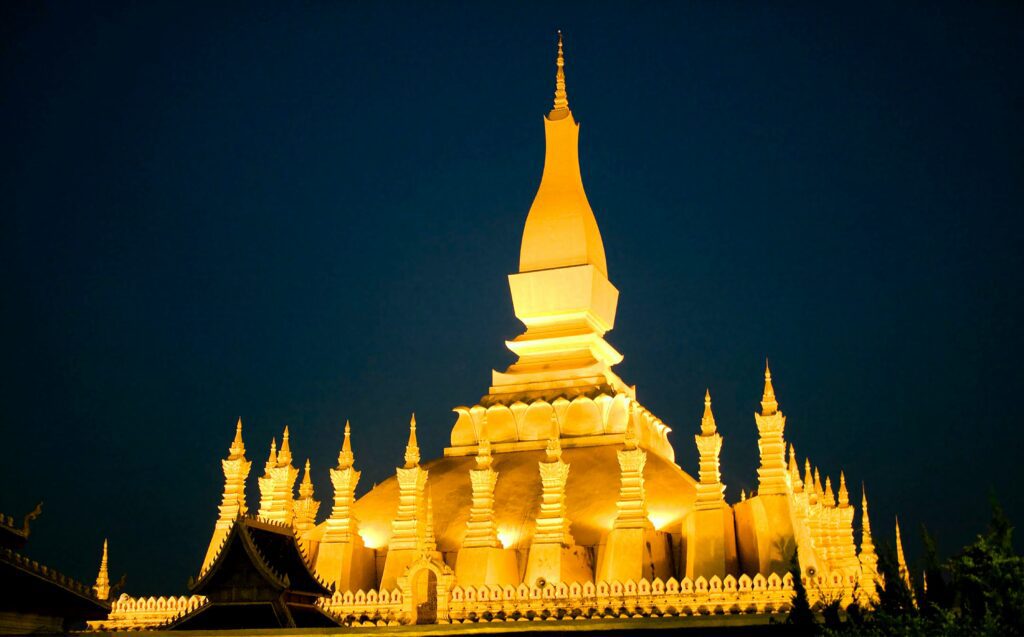
Buddhism shapes daily life across Laos, and nowhere more visibly than in Luang Prabang, with its concentration of active temples and monasteries. Early-morning alms-giving, where monks walk through town collecting food from residents, is one of the most recognisable traditions — and one that deserves genuine respect rather than treatment as a photo opportunity. Observing quietly, keeping a respectful distance, and following local guidance on etiquette matters more here than almost anywhere else in the country.
Beyond the ceremony itself, the temples reward quiet visits at any time of day — the architecture, the murals, and the ordinary rhythm of monastic life that continues around visitors rather than for them. Modest dress (shoulders and knees covered) is expected when entering any temple.
8. Slow Down for Lao Food and Local Life
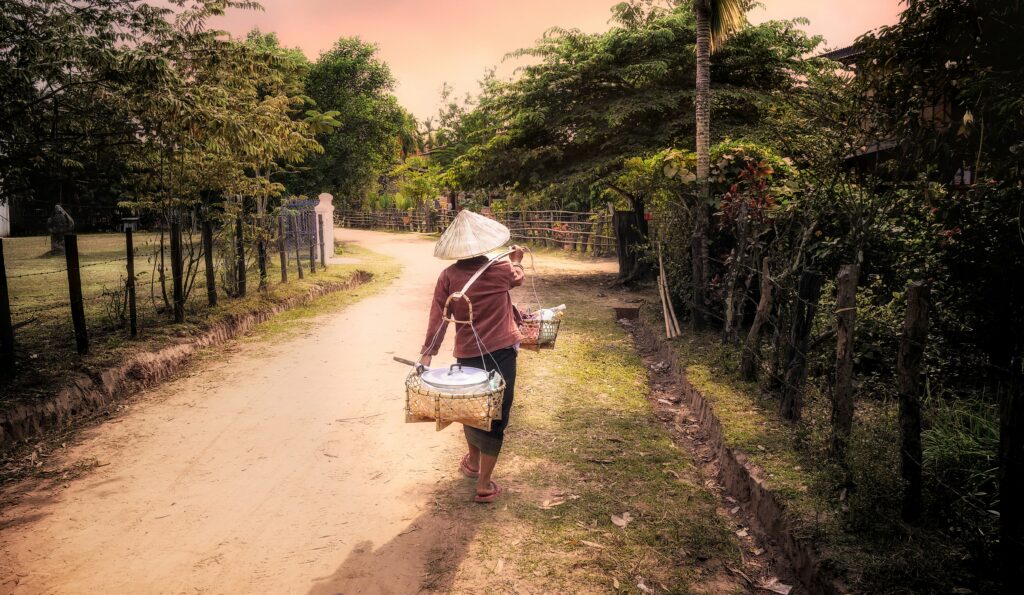
Lao cuisine is distinct from its more internationally familiar neighbours — sticky rice eaten by hand, herbal and often intensely flavoured dishes like larb, and a strong tradition of fresh, local ingredients sold at morning markets. Luang Prabang’s night market and the smaller morning markets across the country are as much about watching daily life unfold as they are about the food itself.
Meals in Laos are worth treating as part of the travel experience rather than a functional stop between activities — a slow lunch at a local restaurant, a market breakfast, or simply people-watching over coffee all add to the texture of a trip built around experiencing the country rather than moving through it.
9. Leave Space for the Unexpected
Every well-planned Laos itinerary should still leave room for what is not on it. A conversation with a guesthouse owner that runs longer than expected. A stretch of road that turns out to be more interesting than the destination at the end of it. A quiet hour by the river that was never in the plan but ends up being the one most remembered.
Sometimes the best part of Laos is the part that wasn’t on the itinerary. Building in unstructured time — a day with no fixed plan, an extra night somewhere that surprised you — is often what separates a good trip to Laos from one that stays with you.
What Most Travellers Get Wrong About Laos
A handful of planning mistakes come up often enough to be worth naming directly.
- Trying to cover too much. Laos is easy to underestimate on a map. Squeezing in extra destinations usually means less time in each place, not more experiences overall.
- Treating every destination as a checklist. Luang Prabang, Vang Vieng and Vientiane each reward slower, more open-ended time rather than a fixed list of sights to complete.
- Underestimating travel time. Even with the train connecting the main towns, journeys still take real time, and road travel to more remote areas can take considerably longer than distances on a map suggest.
- Planning everything around photographs. An itinerary built purely around photo stops tends to skip the villages, temples and slower moments that give Laos its actual character.
- Not leaving flexibility for weather and local conditions. River levels, road conditions and activity availability all shift with the season — a rigid itinerary can break more easily here than in more heavily built-up destinations.
How Many Days Do You Need in Laos?
The right length depends on how much of the country you want to see and how much time you are willing to give each place.
A trip of 5–6 days is workable if you focus on just two destinations, most commonly Luang Prabang and Vang Vieng. It is enough for a genuine first impression, though it leaves little room for Vientiane or for unstructured time.
A 7–8 day trip is the range Magna Voyagee typically recommends for a first visit, allowing a realistic loop through Luang Prabang, Vang Vieng and Vientiane with time to actually experience each rather than rush between them.
A 9–12 day trip allows a genuinely unhurried pace — extra nights in Luang Prabang or along the Nam Song River, more flexibility around weather and activity availability, and room for some of the countryside experiences between the main towns rather than just the towns themselves.
Laos is not a country that rewards trying to cover everything in a short window; a shorter, more focused trip generally leaves a stronger impression than a rushed attempt to see all three main towns and the countryside between them.
A Suggested Laos Itinerary
This is a practical route structure rather than a fixed timetable — exact travel times, train schedules and activity availability vary by season and should be confirmed closer to your travel dates. The Laos-China Railway now makes the Luang Prabang–Vang Vieng–Vientiane route considerably more straightforward than in past years, with train journeys between each town typically taking under three hours, which is what makes an itinerary of this pace realistic.
- Day 1 — Arrive in Luang Prabang. A gentle first day to settle in, with an early night ahead of the town’s early-morning rhythm.
- Day 2 — Luang Prabang and the Old Town. Temples, the night market, the Mekong waterfront, and time to simply walk without a fixed plan.
- Day 3 — Mekong and Kuang Si. A river-focused morning or a visit to Kuang Si Falls, depending on season and personal preference, with time built in rather than a rushed round trip.
- Day 4 — Luang Prabang to Vang Vieng. The train journey takes roughly 1.5–3 hours, leaving most of the day free to arrive and settle in.
- Day 5 — Vang Vieng landscapes and adventure. Caves, viewpoints, and river activities as conditions and interest allow, balanced with slower time along the Nam Song.
- Day 6 — Vang Vieng to Vientiane. Another short train journey, typically under two and a half hours, arriving with time to explore in the afternoon.
- Day 7 — Vientiane. A quieter, more low-key capital than most in the region — temples, riverside streets and a slower final full day.
- Day 8 — Departure. Onward connection, most commonly via a regional hub such as Bangkok.
Best Time to Visit Laos
There is no single “best month” for Laos — the right time depends on what kind of trip you want.
The dry season, roughly October through April, is the most reliable window overall, with November to February generally the most comfortable — warm days, cooler nights, and good conditions for both towns and countryside. March and April bring the hottest stretch of the year, with temperatures climbing well into the mid-30s Celsius in many areas, alongside seasonal haze from agricultural burning in parts of the north.
The green season, roughly May through October, brings the bulk of the year’s rainfall, though typically in short, intense bursts rather than all-day rain. This is when waterfalls like Kuang Si are at their fullest and landscapes are at their most vivid, though road conditions can deteriorate in more remote areas and river levels can affect boat travel. October is often considered a strong shoulder month — drier conditions with the lingering greenery of the rains.
For a first visit built around comfortable travel, temples, waterfalls and river time, the dry season — particularly November to February — offers the most reliable balance, though travellers comfortable with more variable weather can find genuine rewards in the green season too.
How to Reach Laos
There are currently no direct flights between India and Laos. Most Indian travellers connect through a regional hub, most commonly Bangkok, which has strong onward connections to both Luang Prabang and Vientiane. Other Southeast Asian hubs can also work depending on your starting city and preferred routing.
International flights arrive primarily at Luang Prabang International Airport and Vientiane’s Wattay International Airport, both of which serve as practical entry points depending on where your Laos itinerary begins. Overland entry is also possible from neighbouring Thailand, Vietnam, Cambodia and China at various land borders, though this suits travellers already in the region rather than those starting a trip from India.
Because routings and connection times change, it is worth checking current flight options and layover requirements closer to your travel dates rather than assuming a fixed route.
Getting Around Laos
The Laos-China Railway has changed how travellers move between the main towns, connecting Luang Prabang, Vang Vieng and Vientiane with fast, air-conditioned trains that have cut what used to be long, winding road journeys down to a matter of hours. For most itineraries covering these three towns, the train is now the most practical option.
Private vehicles remain useful for families and small groups, particularly for reaching villages, viewpoints and countryside areas the train does not serve, and for travelling at a pace that suits the group rather than a fixed schedule. Local transfers — tuk-tuks and short taxi rides — cover getting around within towns. Boats remain relevant for Mekong River experiences near Luang Prabang, seasonal conditions permitting. Domestic flights connect some of the country’s more distant regions, useful for itineraries that extend beyond the main northern loop.
Is Laos Suitable for Families?
Laos can work well for families, though the right fit depends on the ages of the children and the pace the family prefers. The train journeys between towns make the logistics considerably easier than in the past, removing much of the long-drive fatigue that used to make Laos a harder sell for family trips.
Families with a flexible schedule, an interest in nature and culture over structured activities, and realistic expectations about heat and walking distances tend to do well. Luang Prabang in particular — with its manageable Old Town, waterfalls and gentler pace — suits families better than a fast-moving multi-country itinerary would. A private vehicle for day trips and activities gives families more control over timing and comfort than relying solely on shared transport.
Is Laos Good for Couples?
Laos suits couples who want quiet mornings, riverside stays and scenery that rewards simply being present in it, rather than a destination built around staged romantic experiences. A slow breakfast overlooking the Mekong, an evening by the Nam Song watching the light change over the karsts, or a temple visited without a crowd all offer the kind of unstructured, personal time many couples are actually looking for.
The combination of adventure — caving, river activities, mountain scenery — and genuine tranquillity gives couples room to shape the trip around their own pace, whether that means an active few days in Vang Vieng or long, unhurried stretches in Luang Prabang.
What Should You Pack for Laos?
- Comfortable, broken-in walking shoes for temples, markets and uneven village paths
- Lightweight, breathable clothing suited to heat and humidity
- A light rain jacket or poncho, especially useful during the green season
- Sunscreen and a hat for strong daytime sun
- Insect repellent, particularly for evenings and rural areas
- A reusable water bottle
- A power bank for longer travel days
- A small day bag for temple visits, markets and short excursions
- Modest clothing that covers shoulders and knees for temple visits
- Any personal medicines you rely on, along with a basic first-aid kit
Packing priorities shift slightly with the season — expect more rain protection and quick-drying fabrics in the green season, and layers for cooler nights in the northern hills during December and January.
Laos Trip Cost: What Determines Your Budget?
There is no single “typical” figure worth quoting for a Laos trip — the honest answer is that cost depends on several factors together, and Magna Voyagee builds each itinerary around a traveller’s specific circumstances rather than a fixed package price.
- Flights — international airfare to a connecting hub such as Bangkok, plus the onward flight into Laos, typically make up a significant share of overall cost
- Hotel category — from simple guesthouses to more comfortable boutique properties, particularly in Luang Prabang, options span a wide range
- Number of nights — longer, slower trips naturally cost more in accommodation and transport, offset by a less rushed experience
- Private vs. shared transportation — private transfers and vehicles offer more flexibility at a higher cost than trains or shared transport
- Activities included — temple visits are largely low-cost, but add-ons like specific tours, cave excursions or river activities carry their own cost
- Season — peak dry-season months typically see higher demand and pricing than the green season
- Group size — private vehicles and guides cost the same whether shared by two travellers or six, so group size changes the per-person cost significantly
- Room configuration — family rooms, connecting rooms or multiple rooms affect overall accommodation cost
Who Is a Laos Journey Best For?
Laos tends to suit travellers who are genuinely interested in culture rather than passing through it, who are drawn to nature and river landscapes over resort comfort, and who enjoy road and river journeys as part of the experience rather than a means to an end. It rewards photographers, travellers looking for something beyond the more heavily touristed parts of Southeast Asia, and anyone who appreciates a trip that combines real adventure with genuine tranquillity.
Travellers who prioritise fast-paced, multi-country itineraries or a long list of headline attractions may find Laos slower than they expect — which is precisely the point for those it does suit. Matching the pace of the destination to what you actually want from a trip matters more here than in most Southeast Asian countries.
Frequently Asked Questions
How many days are enough for Laos?
A short trip is possible in 5–6 days focused on two destinations, but 7–8 days is generally a more comfortable first-visit length, allowing time in Luang Prabang, Vang Vieng and Vientiane without rushing.
What is the best time to visit Laos?
The dry season from October to April is generally the most reliable, with November to February offering the most comfortable temperatures. The green season (May–October) brings fuller waterfalls and lush scenery, with more variable weather and road conditions.
Is Laos good for a first-time Southeast Asia trip?
Laos can work well for first-time visitors to the region, particularly those drawn to culture and nature over nightlife and fast-paced sightseeing. Its slower pace and improved train connections make logistics more manageable than in the past, though it suits travellers happy with a quieter trip more than those seeking a high-energy introduction to the region.
Is Laos suitable for families?
It can be, especially with the train connections easing travel between towns and a flexible, unhurried approach to the itinerary. Luang Prabang in particular suits families well.
Is Laos good for couples?
Yes — riverside stays, quiet mornings and a mix of adventure and tranquillity suit couples looking for genuine, unstructured time together rather than a staged romantic itinerary.
Is Luang Prabang worth visiting?
Luang Prabang is generally considered the cultural heart of a Laos itinerary, with its temples, Old Town, night market and Mekong setting — most travellers find it worth building extra time around rather than treating as a brief stop.
Is Vang Vieng worth visiting?
Vang Vieng’s limestone karst landscape and mix of adventure activities and riverside relaxation make it a strong complement to Luang Prabang, particularly for travellers who want an active day or two balanced with slower time by the Nam Song River.
How do you travel between Luang Prabang and Vang Vieng?
The Laos-China Railway connects the two towns by train in roughly 1.5–3 hours, making it the fastest and generally most practical option compared to the considerably longer road journey by minivan.
Is Laos expensive to visit?
Overall cost depends heavily on flight routing, accommodation choices, season and whether you use private or shared transport — see the trip cost section above for the full picture rather than a single figure.
Do Indians need a visa for Laos?
Indian citizens can generally obtain a visa on arrival at major airports and land border crossings, typically valid for around 30 days. Visa rules can change, so this should always be confirmed with official sources close to your travel dates rather than assumed from past information.
What should I wear when visiting temples in Laos?
Modest clothing that covers the shoulders and knees is expected at temples and monasteries. Comfortable, easily removable footwear is also useful, since shoes are typically removed before entering temple buildings.
Plan Laos at Your Own Pace with Magna Voyagee
Laos doesn’t need to be rushed. From the temples and quiet streets of Luang Prabang to the limestone landscapes of Vang Vieng, the Mekong and the villages along the way, the best journeys leave enough space to experience the destination rather than simply move through it.
At Magna Voyagee, we design customised Laos journeys around how travellers actually want to travel — whether that means comfortable private transfers, carefully chosen stays, family-friendly experiences, adventure, cultural exploration or simply more time to slow down.
Don’t just visit Laos.
Give yourself time to experience it.
Plan Your Laos Journey with Magna Voyagee
Enquire for a Customised Laos Itinerary
Written by the Magna Voyagee Travel Team | Destination specialists in customised journeys