
Georgia Is the Country That Changes Every Kind of Traveller
Georgia Is the Country That Changes Every Kind of Traveller
There is a moment, usually somewhere on the road between Tbilisi and Kazbegi, when the conversation in the car simply stops. Not out of boredom — the opposite. The Aragvi River has narrowed into a gorge, the hills have turned into mountains, and somewhere ahead, if the clouds cooperate, Mount Kazbek is about to appear the way genuinely large things do: suddenly, and without asking permission.
That moment repeats itself in different forms all over Georgia. It happens in Tbilisi’s Old Town, where sulfur-bath steam drifts up past nineteenth-century balconies leaning toward each other over a lane too narrow for a car. It happens in a Kakheti cellar, watching a winemaker crack open a clay qvevri buried in the earth, using a method that predates most of what we consider ancient. It happens on a plastic chair in someone’s courtyard in Kakheti, being handed a horn of wine and told, gently but firmly, that this particular toast is not optional.
Georgia has a habit of not staying in the category you first put it in. Travellers arrive expecting mountains and leave remembering the food. They come for the wine and leave remembering a monastery balanced on a cliff above two rivers. They plan four days for Tbilisi and end up spending two of them in a village whose name they can’t quite pronounce, talking to a family who insisted they stay for lunch and somehow kept them until dinner.
For Indian travellers in particular, Georgia has quietly become one of the most talked-about trips of the last few years — and the reasons hold up on closer inspection. It offers genuinely dramatic Caucasus scenery within a two-week trip rather than a month-long expedition. The food leans on grilled meats, walnuts, herbs, bread and fresh vegetables in ways that feel familiar rather than foreign. Direct and one-stop flight connections from major Indian cities have made it more accessible than it was even five years ago. And a favourable exchange rate against the Lari means a genuinely comfortable trip — good hotels, private transport, real wine tastings — costs meaningfully less than the same standard would in Western Europe.
None of that fully explains why people fall for Georgia the way they do, though. That has more to do with scale. This is a small country — you can drive across most of it in a single long day — that somehow contains high-altitude mountain villages, a Black Sea coastline, an 8,000-year wine tradition, canyon boat rides through water the colour of green glass, and a capital city that feels like several different centuries built directly on top of each other. Few countries this size ask so little of your itinerary and give back so much.
This guide is built for the traveller who wants more than a Tbilisi weekend — someone planning a proper Georgia trip, honeymoon, or small-group journey, and who wants an honest sense of what the country actually asks of you, season by season, region by region, before they book anything.
Why You Can Trust This Guide
This guide has been researched using official Georgian tourism information, current entry and travel advisories, and destination-specific sources for each region covered, cross-checked at the time of writing. Where a detail changes frequently — visa rules, road conditions, seasonal closures — we’ve flagged it as something to reconfirm closer to your travel dates rather than presenting it as fixed. This is not a first-hand trip report; it is a carefully researched planning guide, and we’ll always tell you when something needs your own verification before you book.
Quick Georgia Travel Facts
| Capital | Tbilisi |
| Currency | Georgian Lari (₾ / GEL) |
| Best Time | May–June and September–October |
| Ideal Duration | 8–10 days for a first visit |
| Language | Georgian (unique script); English and Russian widely understood in tourism |
| Main Airports | Tbilisi (TBS), Kutaisi (KUT), Batumi (BUS) |
| Travel Style | Road trip, mountain scenery, wine culture, city and coast |
| Perfect For | Honeymooners, families, girls’ trips, small groups, FIT travellers |
| Connectivity | Good 4G in cities and main routes; patchy in high mountains |
| Payments | Cards widely accepted in cities; cash needed in villages and mountains |
| Safety | Consistently ranks among the safer countries in Europe for travellers |
Why Georgia Feels Different
Georgia sits at a genuine crossroads — geographically between Europe and Asia, historically between Persian, Ottoman, Byzantine and Russian influence, and culturally somewhere entirely its own. That layering shows up everywhere. A single day can move you from a Soviet-era cable car to an eleventh-century cathedral to a family-run winery still using clay vessels buried in the ground eight millennia after the method was first developed here — a technique now recognised by UNESCO as intangible cultural heritage.
The landscape works the same way. Within a compact country, the Caucasus mountains in the north rise past 5,000 metres while the Black Sea coast in the west stays warm enough for a beach holiday. Kakheti in the east grows some of the world’s oldest wine grapes across a wide, gentle valley, while Svaneti in the northwest hides medieval stone defensive towers in villages that were, for centuries, cut off from the rest of the country by snow.
What ties it together is hospitality that doesn’t feel performative. The supra — Georgia’s traditional feast, guided by a toastmaster called the tamada — exists specifically to make a guest feel like the most important person in the room, and it is offered to travellers with a warmth that has very little to do with tourism revenue. Georgians will tell you, without much prompting, that a guest is a gift from God. Spend a few days here and you start to believe they mean it.
Walk Through Tbilisi Before the City Wakes Up
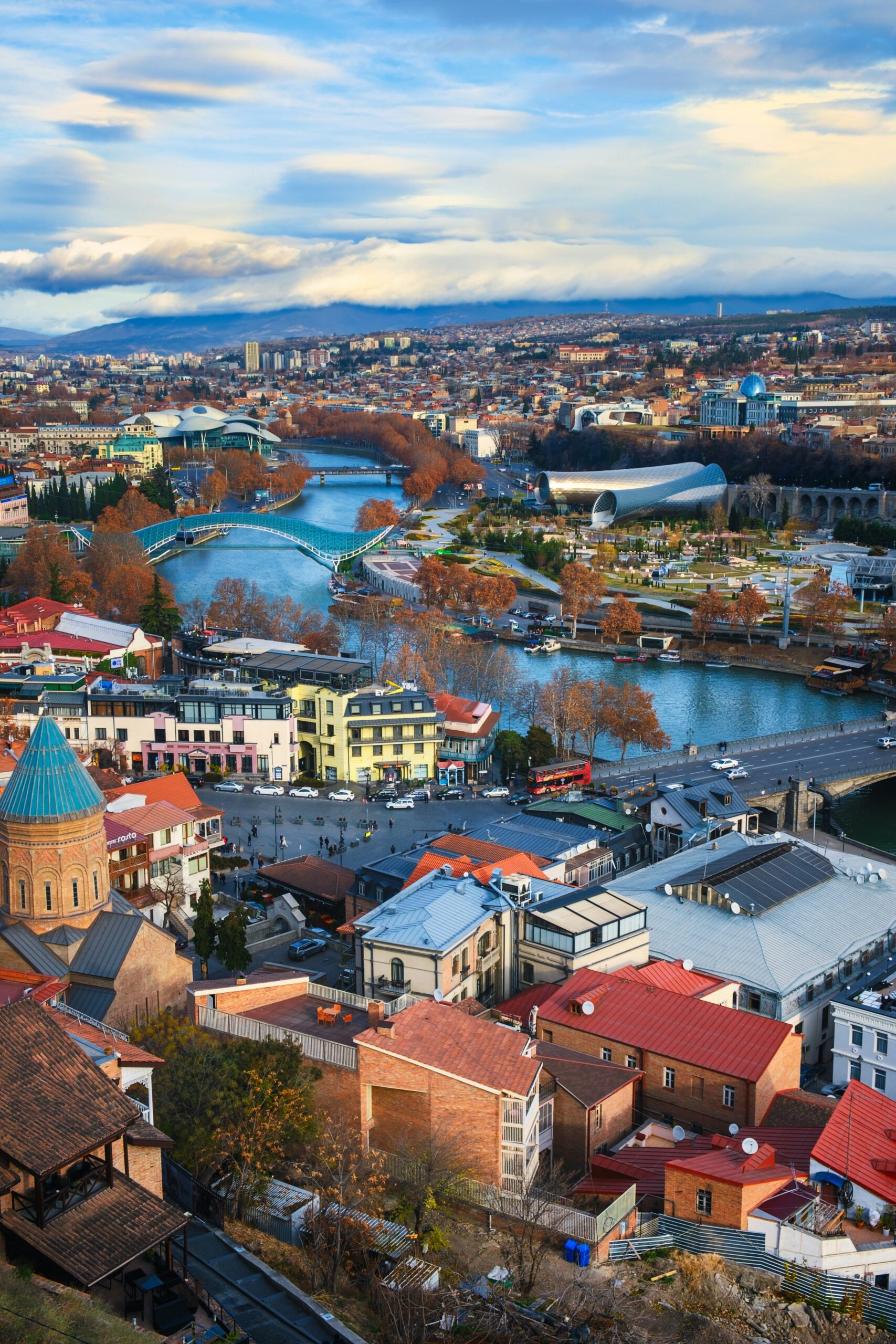
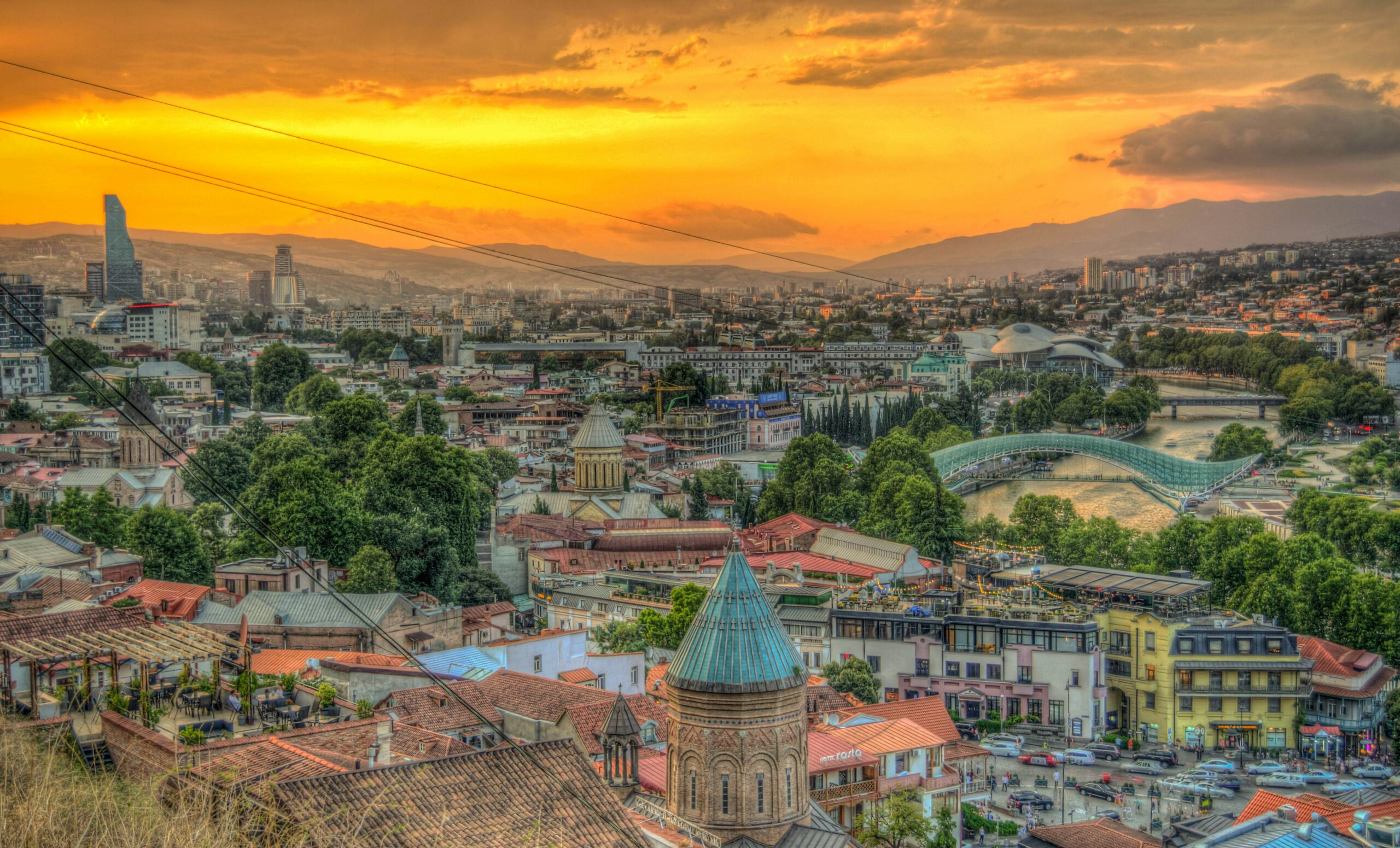
Tbilisi rewards early risers. Before the tour groups arrive, the Old Town’s narrow lanes — carved wooden balconies leaning into each other, patched brick, the occasional vine growing straight up a wall — belong almost entirely to residents heading to work and bakers pulling the first bread of the day. Climb toward Narikala Fortress as the light turns gold, and the whole city unrolls beneath you: the Mtkvari River, the onion-domed sulfur bathhouses of Abanotubani, and the Bridge of Peace’s glass canopy catching the early sun.
The fortress itself dates back to the fourth century in its earliest form, rebuilt and expanded by successive rulers for over a thousand years. Below it, the sulfur baths remain a genuinely local institution — descend into one for a private room and a scrub, and you’re doing exactly what Tbilisi residents have done for centuries, not performing a tourist ritual invented for visitors.
Best time: Sunrise for the fortress and views; late morning for the baths, before midday queues build.
Magna Voyagee Tip: Book a private sulfur bath room rather than the communal option for your first visit — it’s a gentler introduction and easier to enjoy without prior experience.
Gergeti Trinity Church at Sunrise
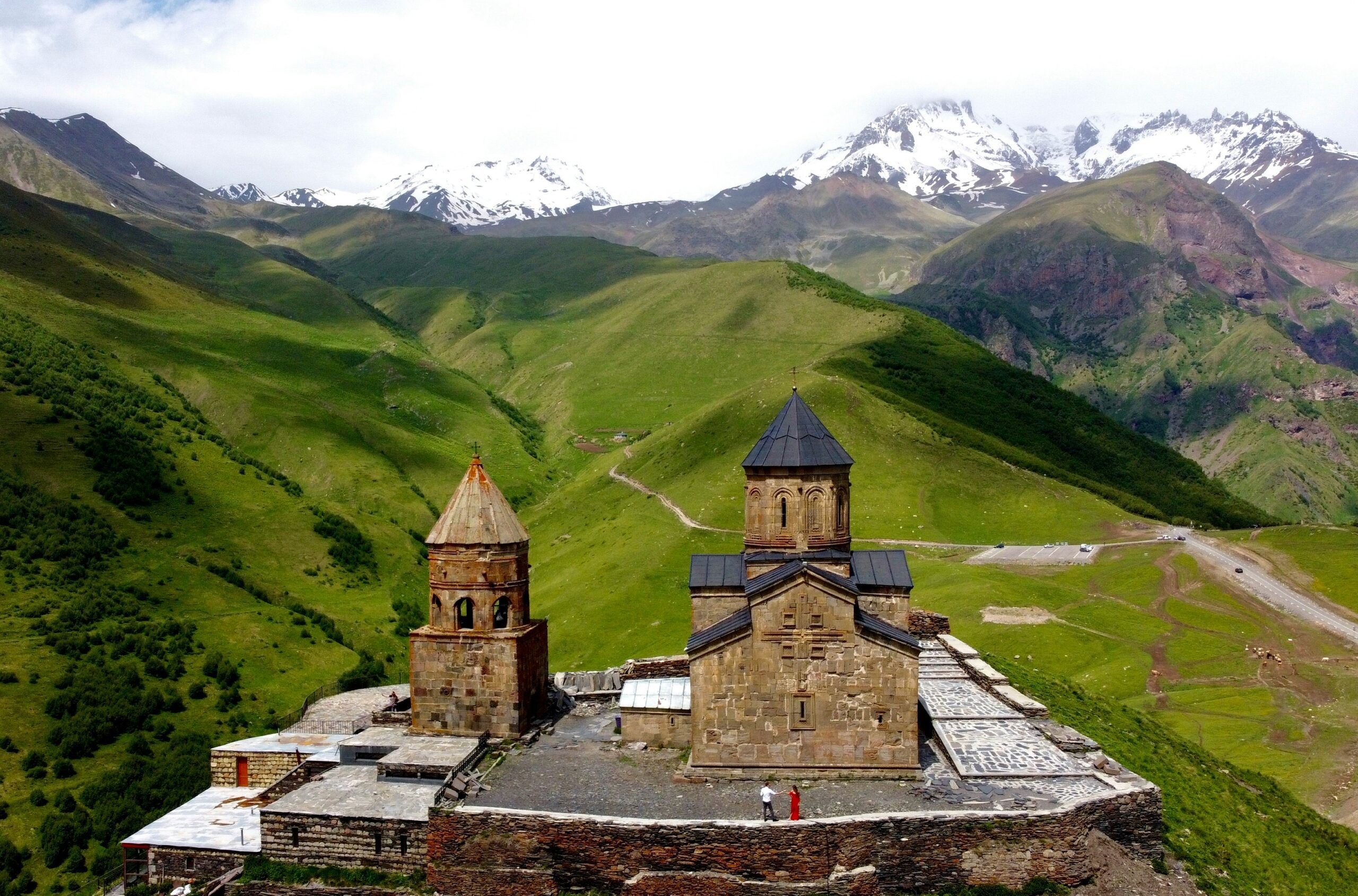
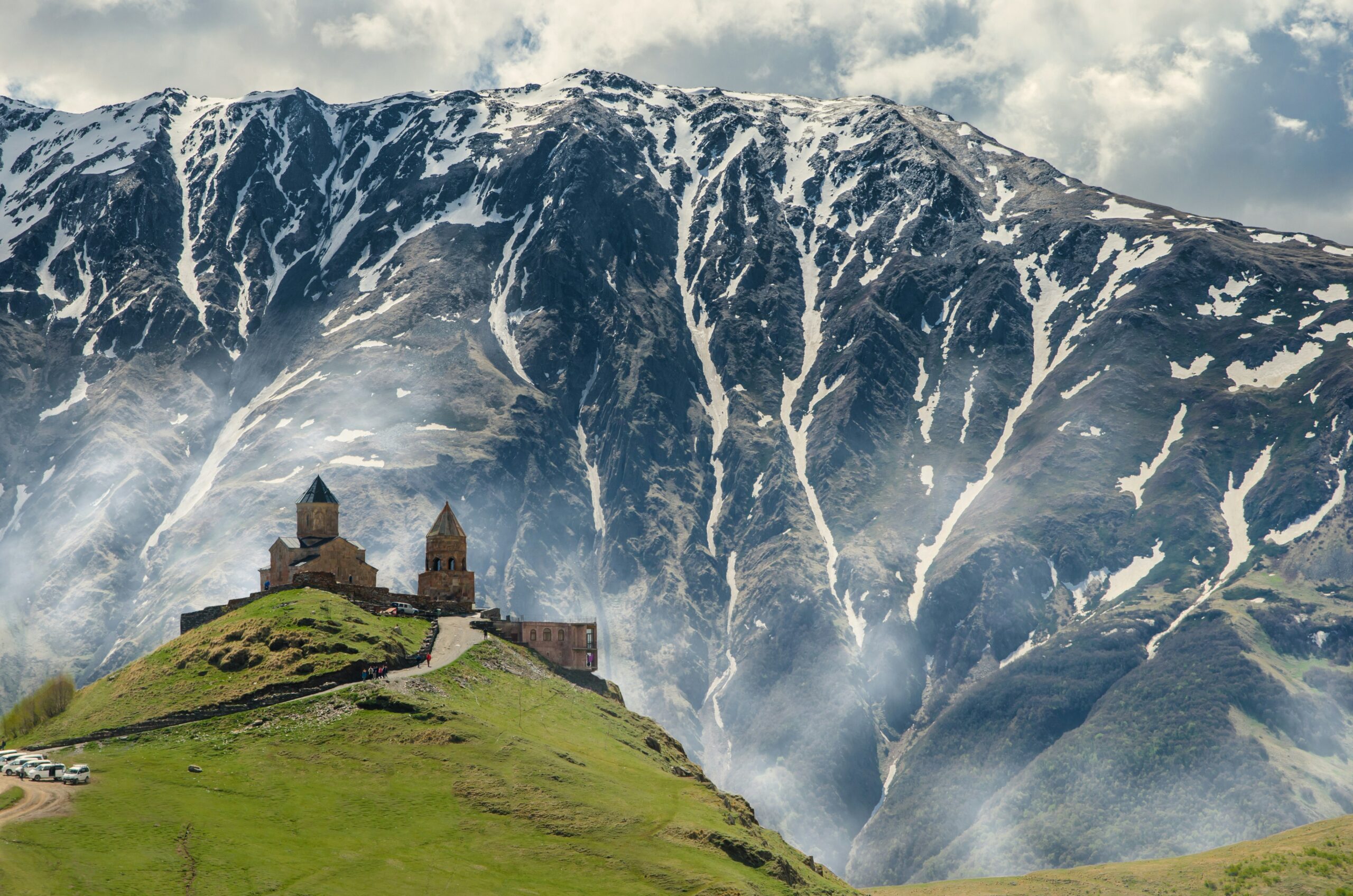
Above the village of Stepantsminda, at roughly 2,170 metres, the fourteenth-century Gergeti Trinity Church sits alone on a hillside with Mount Kazbek — at 5,047 metres, one of the highest peaks in the Caucasus — rising directly behind it. It is, without much competition, the single most photographed frame in Georgia, and the reason is simple: very few churches anywhere sit this deliberately in conversation with a mountain this large.
A standard car cannot make the climb. Most travellers hire a 4×4 for the fifteen- to twenty-minute drive up from Stepantsminda, though the hike — roughly ninety minutes to two hours on a clear trail — is entirely manageable for a reasonably fit traveller and arguably the better way to arrive slowly. Mornings offer the best odds of an unclouded Kazbek; the peak has its own weather system and can vanish behind cloud within the hour.
Best time: May to October for road access; early morning for the clearest views of Kazbek.
Magna Voyagee Tip: Build in a two-night stay in Stepantsminda rather than a single day trip — one extra sunrise attempt roughly doubles your odds of an unobstructed mountain.
The Georgian Military Highway
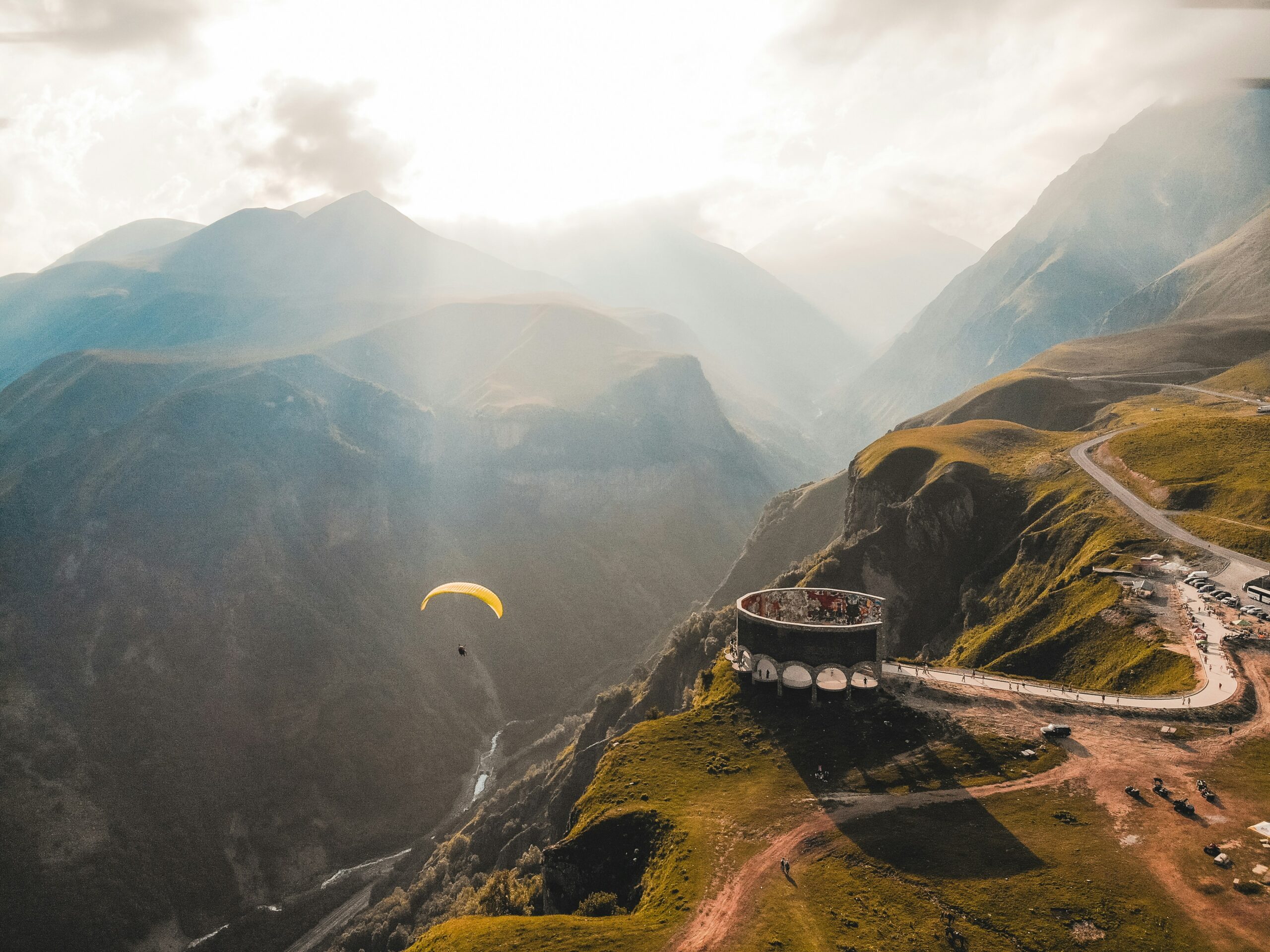
Few road trips pack this much into so short a distance. The Georgian Military Highway climbs from Tbilisi through the Aragvi valley to the Russian border, and the first 150 kilometres or so — as far as Kazbegi — form one of the great short drives anywhere in the Caucasus. Ananuri Fortress, a walled seventeenth-century complex above a turquoise reservoir, makes a natural first stop about seventy kilometres out of Tbilisi. From there the road climbs steadily to Gudauri, then crosses the Jvari Pass — also called the Cross Pass — at nearly 2,400 metres, before dropping into Kazbegi.
The pass can close briefly during winter snowfall, and the road’s official status is worth checking before travelling between November and April. Outside that window, this is one of the more comfortable mountain drives in the region — paved, well-used, and dotted with viewpoints that make frequent stops worthwhile rather than an inconvenience.
Best time: May–June and September–October for clear roads and good light; check current road status in winter.
Magna Voyagee Tip: Stop at the Russia–Georgia Friendship Monument near Gudauri — an unmarked mosaic viewpoint most guidebooks underplay, with one of the best valley panoramas on the entire route.
Kakheti’s Wine Culture
Kakheti is where Georgia’s identity as one of the world’s oldest wine regions becomes tangible rather than theoretical. Grape cultivation here stretches back roughly 8,000 years, and the traditional qvevri method — fermenting and ageing wine in large egg-shaped clay vessels buried underground — is still practised in family cellars across the region, not just as heritage theatre but as an active, everyday craft.
A day here typically means moving between small, family-run wineries in and around Telavi and the Alazani Valley, tasting amber and red qvevri wines that taste distinctly different from anything produced in stainless steel elsewhere, usually accompanied by whatever the household happens to be cooking that day. The eleventh-century Alaverdi Monastery, the tallest church in Kakheti and the second-tallest in the country, stands surrounded by its own vineyards and remains an active monastic winery today.
Best time: September to early November for the rtveli grape harvest, though many cellars close briefly to focus on the harvest itself; late spring for quieter tastings.
Magna Voyagee Tip: Ask specifically for a family-run marani (wine cellar) tasting rather than a large commercial winery — the conversation and the wine both tend to be more memorable.
Sighnaghi, the Town That Painted Itself Into a Postcard
Sighnaghi sits on a hilltop above the Alazani Valley, ringed by roughly 4.5 kilometres of eighteenth-century defensive walls that still frame the town almost completely. Cobblestone streets, carved wooden balconies and a genuinely unhurried pace have earned it a reputation locally as the “city of love” — Georgian couples still travel here for spontaneous weddings, thanks to a registry office that stays open around the clock.
Walking the wall at golden hour, with the vineyards of the valley spreading out below and the Caucasus visible on a clear day, is reason enough to build in an overnight rather than a rushed afternoon stop between wineries.
Best time: Late afternoon into sunset for the walls; year-round, though autumn colour in the valley below is particularly striking.
Magna Voyagee Tip: Stay overnight in a family-run guesthouse inside the walls rather than day-tripping from Tbilisi — Sighnaghi after the tour buses leave is a genuinely different, quieter place.
Mtskheta, Georgia’s Spiritual Capital
Mtskheta was Georgia’s ancient capital and remains, in a real sense, its spiritual one. Jvari Monastery sits on a hilltop where the Mtkvari and Aragvi rivers meet, a sixth-century structure whose commanding position over the valley below has made it a place of pilgrimage for well over a thousand years. Down in the town itself, Svetitskhoveli Cathedral — believed to be built on the burial site of Christ’s robe, according to Georgian tradition — remains one of the most important religious sites in the country and forms part of Mtskheta’s UNESCO World Heritage listing alongside Jvari.
The two sites face each other across the valley, and seeing Jvari from below, then looking back at it from the cathedral courtyard, gives a genuine sense of why this particular confluence of rivers came to matter so much to Georgian history and faith.
Best time: Morning, both for softer light on the stonework and to avoid the tour-bus rush that arrives from Tbilisi by midday.
Magna Voyagee Tip: Combine Mtskheta with the start or end of a Kakheti day trip — it sits on the way and rewards an hour or two far more than a rushed twenty-minute stop.
Svaneti — Mestia and the Road to Ushguli
Svaneti feels like a different country within Georgia, and for much of its history, functionally was one — a highland region so isolated by snow for parts of the year that its villages developed their own architecture, dialect and clan customs largely undisturbed. The medieval stone defensive towers that still rise above Svan village rooftops were built for exactly that purpose: protecting families during blood feuds that have long since ended, leaving only the towers behind.
Mestia is the regional hub, reachable by a scenic domestic flight or a full day’s drive from Tbilisi, with a small airport, a good regional museum and enough restaurants and guesthouses to make a comfortable base. Ushguli, a cluster of four villages roughly two hours further by 4×4 on a rough, occasionally river-crossed track, sits at around 2,200 metres and is regularly described as one of the highest permanently inhabited settlements in Europe — a UNESCO-listed community of around thirty towers with Georgia’s tallest peak, Mount Shkhara, rising directly behind it.
Best time: June to September, when both the Mestia road and the Ushguli track are reliably passable.
Magna Voyagee Tip: Give Svaneti a minimum of two full days — one for Mestia and the Koruldi Lakes hike, one for Ushguli — rather than a rushed single-day return; the drive alone deserves unhurried daylight.
Batumi and the Black Sea
Batumi is Georgia’s answer to a beach holiday, and it commits to the idea with a slightly surreal enthusiasm — glass towers, a moving metal sculpture of star-crossed lovers that separates and reunites nightly, and enough casinos and neon to earn it a nickname as the Las Vegas of the Caucasus. Look past the spectacle, though, and there’s real substance: an Old Town of Art Nouveau and Art Deco facades, a seven-kilometre boulevard built for slow evening walks, and a 1912 botanical garden with genuinely excellent coastal viewpoints.
The city’s dual identity — beach resort by day, unapologetically flashy at night — makes it a good counterbalance to the mountains and monasteries elsewhere on a Georgia itinerary, particularly toward the end of a longer trip.
Best time: Late June to early September for swimming weather; late September into October for the quieter, milder “velvet season.”
Magna Voyagee Tip: Take the high-speed train from Tbilisi rather than driving — it’s comfortable, scenic in its final stretch along the coast, and removes a long drive from an already full itinerary.
Gudauri, Where the Caucasus Show Off
Most travellers pass through Gudauri on the way to Kazbegi without stopping properly, which is a genuine missed opportunity. Sitting at around 2,200 metres on the Georgian Military Highway, Gudauri commands some of the widest, most cinematic Caucasus panoramas accessible directly from a paved road — no trek required. In winter it becomes Georgia’s best-known ski resort, with a season generally running from late December through April and its most reliable snow in late January and February.
Outside ski season, Gudauri works well as a scenic lunch stop, a paragliding launch point on clear days, or simply the place to pull over and let the scale of the mountains sink in before continuing to Kazbegi.
Best time: Late January–February for skiing; May–October for paragliding and mountain views without snow.
Magna Voyagee Tip: If travelling in winter, budget an extra buffer hour around Gudauri and the Jvari Pass — this stretch is the most likely on the whole route to see a weather delay.
Martvili Canyon’s Emerald Water
In western Georgia’s Imereti region, the Abasha River has carved Martvili Canyon into a narrow gorge of layered rock walls and small waterfalls, with water that genuinely does run an emerald green in good light. A short boat ride glides through the canyon’s most dramatic stretch, and it has become one of the most photographed short excursions in the country for good reason — it delivers a striking, easy payoff in under an hour.
Okatse Canyon, a forested gorge with a suspended walkway along the cliff face, sits close enough to combine into the same day trip from Kutaisi, making this an efficient, high-impact addition to a western Georgia itinerary.
Best time: Late spring through early autumn, when water levels and light both favour the boat ride; arrive early to avoid midday queues.
Magna Voyagee Tip: Pair Martvili with Okatse Canyon and Kutaisi’s Prometheus Cave in a single day trip — the three sit close enough together to avoid backtracking.
Kutaisi, the Quiet Gateway
Kutaisi rarely gets billed as a headline destination, and that’s precisely its appeal. Georgia’s third-largest city and one-time ancient capital, it moves at a noticeably slower pace than Tbilisi or Batumi, anchored by the eleventh-century Bagrati Cathedral overlooking the Rioni River and the nearby Gelati Monastery, a UNESCO World Heritage monastic complex founded by King David the Builder.
Its growing importance as a budget-airline gateway to western Georgia — putting Svaneti, Martvili, Okatse and Batumi all within a couple of hours’ drive — has quietly made it one of the more practical bases for a western-Georgia loop, even for travellers who never intended to spend much time in the city itself.
Best time: Year-round; a half-day is usually enough for the cathedral and monastery combined.
Magna Voyagee Tip: If your itinerary includes both Svaneti and Batumi, consider flying into Kutaisi rather than Tbilisi — it can save a full day of backtracking across the country.
What Most Travellers Miss in Georgia
Most Georgia itineraries move fast between headline sights and skip the details that locals mention first. Tbilisi’s Dezerter Bazaar, a sprawling working market rather than a tourist one, offers a far more honest look at daily Georgian life — spices, cheese, churchkhela and home-pickled vegetables — than any curated food tour. In Kakheti, family-run marani cellars tucked into village side streets, rather than the larger tasting rooms on the main road, are where the most memorable wine conversations tend to happen.
Sunset from the Mother of Georgia statue above Tbilisi, looking down over the Old Town as the lights come on, draws a fraction of Narikala’s daytime crowd despite an equally good view. And in western Georgia, the Soviet-era cable cars of Chiatura — still functioning, still carrying local commuters up sheer cliff faces to reach hillside neighbourhoods — offer a genuinely different, unpolished side of the country that most itineraries never go looking for.
Traveller’s Note from Magna Voyagee
There’s a particular kind of Georgia trip that looks perfect on paper and misses the point entirely — Tbilisi, a fast day trip to Kazbegi, a wine tasting squeezed in on the way to the airport. It photographs well. It just isn’t really Georgia.
The version of this trip we’d actually recommend gives Kakheti a proper overnight rather than a rushed afternoon, sits with a family for a meal that runs longer than planned, and accepts that a mountain road might take an extra hour because the view demanded a stop nobody scheduled. Georgia rewards travellers who build in that slack far more generously than it rewards travellers racing to check off every sight on a list.
What Most Travellers Get Wrong About Georgia
Assuming visa-free entry without checking. Indian passport holders generally need to apply for an eVisa in advance — visa-on-arrival is not available, and requirements including mandatory travel insurance have changed in recent years. Always confirm current rules before booking.
Staying only in Tbilisi. A city-only trip misses almost everything that makes Georgia distinctive — the mountains, the wine country and the coast are all within a manageable drive.
Skipping Kakheti for time reasons. Kakheti is frequently treated as a rushed day trip when it rewards at least one overnight, particularly around the September–October harvest.
Underestimating mountain weather. Kazbek and the Jvari Pass can turn from clear to clouded — or briefly closed — within hours, especially outside peak summer months.
Rushing the itinerary. Georgia’s regions sit closer together than they look on a map, which tempts overpacked schedules that leave little room for the unplanned stop that often becomes the trip’s highlight.
Not carrying cash outside cities. Cards work well in Tbilisi and Batumi, but village guesthouses, small wineries and mountain stops often expect cash.
Not booking Svaneti or Kazbegi stays early. Accommodation in both is limited relative to demand in July and August; book well ahead for peak season.
Treating Batumi as beach-only. Visitors who skip the Old Town and Botanical Garden for the boulevard alone miss a meaningful part of the city’s character.
Underestimating the supra. A toast at a Georgian feast is a genuine cultural exchange, not a formality to rush through — approach it with the patience it deserves.
Ignoring the rtveli harvest calendar. Some Kakheti cellars scale back tastings during the September–November harvest itself; check ahead if wine tourism is a priority for those dates.
Best Time to Visit Georgia
Spring (late March–May). Unpredictable, with lower elevations warming up while high mountain passes remain closed. Late May brings the first reliable access to Svaneti and the higher parts of Kazbegi.
Summer (June–early September). The most popular season. Tbilisi and the lowlands can reach 35–40°C, while the mountains stay noticeably cooler — ideal conditions for Svaneti, Kazbegi and Gudauri hiking, alongside the best beach weather in Batumi.
Autumn (mid-September–November). Widely considered the finest season, with comfortable temperatures, clear light, and the rtveli grape harvest moving from east to west across the country. Batumi’s “velvet season” in late September and October adds pleasant coastal weather with fewer crowds.
Winter (December–mid-March). Mild in Tbilisi and the lowlands, genuinely cold in the mountains. Gudauri’s ski season typically runs from late December through April, with the most reliable snow in late January and February; the Georgian Military Highway can see brief closures during heavy snowfall.
Magna Voyagee Recommended Itinerary (8 Days)
Day 1 — Arrive Tbilisi. Settle in, and spend the evening in the Old Town around Abanotubani and the sulfur baths.
Day 2 — Tbilisi. Narikala Fortress at sunrise, the Bridge of Peace, Dezerter Bazaar, and an evening walk up to the Mother of Georgia statue for sunset over the city.
Day 3 — Georgian Military Highway to Kazbegi (≈150 km, 3–4 hrs with stops). Ananuri Fortress, Gudauri viewpoints, the Jvari Pass, arriving in Stepantsminda by afternoon.
Day 4 — Kazbegi. Morning ascent to Gergeti Trinity Church, an afternoon short hike if weather allows, overnight in Stepantsminda or return to Tbilisi.
Day 5 — Mtskheta and Kakheti (≈100 km total). Jvari Monastery and Svetitskhoveli Cathedral in the morning, continuing to Telavi or Sighnaghi for wine tastings and an overnight in Kakheti.
Day 6 — Kakheti to Batumi or Kutaisi. Explore Sighnaghi’s walls and the Alaverdi Monastery before travelling onward — by train to Batumi, or via Tbilisi to a Kutaisi flight, depending on your route.
Day 7 — Batumi (or Kutaisi region). Batumi Boulevard, Old Town and the Botanical Garden — or, on the western route, Martvili and Okatse Canyons plus Kutaisi’s Bagrati Cathedral.
Day 8 — Departure. Fly out from Batumi, Kutaisi or return to Tbilisi, depending on your routing.
This assumes reasonable weather and road conditions on the mountain routes. Travellers wanting to add Svaneti properly should plan closer to 10–11 days to avoid compressing the western loop.
Georgia Budget Guide
Costs vary with season, group size and choice of accommodation, so treat the following as planning ranges rather than fixed quotes.
Budget. Guesthouses and shared marshrutka transport between cities, local dining, and self-guided sightseeing — Georgia remains genuinely affordable at this tier compared with most of Europe.
Comfortable. A private driver or rental car for the mountain and wine-region legs, mid-range hotels and guesthouses, a mix of local and international dining, and a couple of guided wine or canyon experiences — the most common tier for an organised trip.
Premium. A dedicated private vehicle and driver-guide for the full route, boutique hotels in Tbilisi and Batumi, private wine tastings and a Svaneti extension, with flexibility to adjust the pace around weather.
Across all tiers, private transport for the mountain regions is usually the largest single cost, given the distances between Tbilisi, Kakheti, Svaneti and Batumi. Magna Voyagee can build a specific costed itinerary once your dates, group size and comfort level are known — explore our Georgia tour package or get in touch and we’ll plan it around you.
Where to Stay
Tbilisi’s Old Town puts you within walking distance of the sulfur baths, Narikala and the best evening atmosphere, though rooms can be smaller and streets narrower for vehicle drop-off; Vake and Vera offer a quieter, more residential alternative with easy taxi access. Stepantsminda (Kazbegi) has a growing number of guesthouses with direct Kazbek views — book ahead for July and August. Sighnaghi and Telavi both work as Kakheti bases, with Sighnaghi better for atmosphere and Telavi more central for visiting multiple wineries. Mestia is Svaneti’s obvious base, with guesthouses generally more comfortable than Ushguli’s more limited options. Batumi’s Boulevard-adjacent hotels suit a beach-first stay, while the Old Town offers more character for a shorter visit.
Food in Georgia
Georgian cuisine is built around bread, cheese, walnuts, fresh herbs and unhurried, communal eating — and it travels well for Indian palates used to bold, herb-forward food. Khachapuri, a cheese-filled bread, comes in regional forms: the boat-shaped Adjaruli version arrives topped with a raw egg and butter to stir in tableside, while the Imeruli version is a simpler, rounder cheese bread. Khinkali, twisted soup dumplings filled with spiced meat or, for vegetarians, potato, mushroom or cheese, are eaten by hand and traditionally left by their thick dough “handle,” which isn’t eaten.
Vegetarian travellers are well looked after: pkhali (walnut and herb-based vegetable pâtés), badrijani nigvzit (fried eggplant rolled around a walnut paste), and lobio (a slow-cooked bean stew) are all substantial, meat-free staples rather than afterthoughts. Churchkhela — walnuts threaded on a string and dipped repeatedly in thickened grape juice until it sets into a firm, chewy candy — makes a good edible souvenir. And no first Georgian meal is complete without encountering the supra properly: a long, toast-led feast guided by a tamada, where the wine, much of it homemade, flows for hours and the toasts range from family to peace to absent friends.
Photography & Instagram Guide
Best sunrise light falls on Narikala Fortress and the Old Town rooftops below it, and on Gergeti Trinity Church with Kazbek behind it on a clear morning. For sunset, the Sighnaghi city walls over the Alazani Valley and the Mother of Georgia statue viewpoint above Tbilisi both hold light well into evening. The Georgian Military Highway near Gudauri offers the best road and mountain-scale shots, while Martvili Canyon‘s boat ride delivers the most distinctive water-and-rock frames in the country. For architecture, Batumi’s Old Town facades and the moving Ali & Nino sculpture at 7 p.m. are reliable crowd-pleasers, and in Svaneti, the Svan towers of Ushguli with Mount Shkhara behind them are unmatched.
Avoid flying drones near border regions, military sites, or without checking local rules in advance, and always ask before photographing inside working churches, monasteries, or private homes.
Responsible Travel in Georgia
Georgia’s tourism growth has been rapid, and small choices help keep it sustainable. Favour family-run guesthouses, marani wine cellars and local restaurants over larger chain operations where possible — this is where tourism income most directly reaches the communities you’re visiting. In Svaneti, remember that the towers and villages are homes, not open-air museums; ask before entering private property or photographing residents.
Respect monastery and church etiquette throughout the country — modest dress, quiet voices, and asking before photographing inside active places of worship. And be aware that South Ossetia and Abkhazia are contested, currently Russian-occupied regions with no safe or straightforward tourist access; hikers near border areas should stick to marked routes and travel with local guides who know exactly where those lines fall.
Who Is Georgia Really For?
Honeymooners will find genuine romance in Sighnaghi, Kazbegi’s mountain views and Kakheti’s slow wine culture. Families with children old enough for full days of sightseeing will manage the pace comfortably, with enough variety — mountains, canyons, beach — to hold everyone’s interest. Girls’ trips and small groups benefit from Georgia’s safety record and the ease of splitting private transport costs across a group. Photographers are exceptionally well served by the sheer visual range packed into one country. Wine enthusiasts will find few destinations anywhere with an equally deep, hands-on winemaking tradition. Budget-conscious travellers get a genuinely high-value trip relative to cost. Adventure travellers wanting more should treat Svaneti and Tusheti as a strong add-on rather than the whole trip, given their remoteness and shorter accessible season.
Georgia is less suited to travellers wanting a purely beach-based relaxation trip with no road time at all — the country’s best experiences are spread across regions that need genuine travel time between them.
Frequently Asked Questions
Do Indian citizens need a visa for Georgia?
Most Indian passport holders need to apply for a Georgian eVisa in advance; visa-on-arrival is not available. Some Indian travellers holding valid visas from certain other countries may qualify for visa-free entry. Always check current requirements on Georgia’s official visa portal before booking.
What is the best time to visit Georgia?
May–June and September–October offer the most reliable combination of good weather, open mountain roads, and manageable crowds. Summer suits beach time in Batumi; winter suits skiing in Gudauri.
How many days do you need in Georgia?
Eight to ten days covers Tbilisi, Kazbegi, Kakheti and either Batumi or a western Georgia loop comfortably. Add two to three days to include Svaneti properly.
Is Georgia safe for tourists?
Georgia consistently ranks among the safer countries in the region for travellers, including solo and female travellers, with a strong police presence in tourist areas. Standard precautions around unofficial taxis and pickpocketing still apply, and South Ossetia and Abkhazia should be avoided.
What currency is used in Georgia, and are cards accepted?
The Georgian Lari (GEL). Cards are widely accepted in Tbilisi, Batumi and most tourist businesses; cash is still needed in villages, smaller wineries and mountain areas.
Is Georgian food vegetarian-friendly?
Yes — dishes like pkhali, badrijani nigvzit, lobio and vegetable khinkali are substantial, widely available vegetarian staples rather than exceptions.
Is the road to Svaneti safe to drive?
The road to Mestia has improved significantly and suits standard vehicles in good weather; the onward track to Ushguli requires a 4×4 and can become impassable after heavy rain or snow.
What language is spoken in Georgia, and is English widely understood?
Georgian, written in its own unique script, is the official language. English is understood in most tourism-facing businesses in Tbilisi, Batumi and Kazbegi, less so in smaller villages.
Is Georgia good for a honeymoon?
Yes — Sighnaghi, Kakheti’s wineries and Kazbegi’s mountain scenery are popular honeymoon choices, combining romance, privacy and dramatic landscapes without requiring a long-haul, high-budget trip.
What is the approximate cost of a Georgia trip from India?
Costs vary with season, group size and comfort level, with flights and private mountain-region transport the largest expenses. Magna Voyagee can provide a costed itinerary based on your exact dates and preferences.
Continue Your Journey
Georgia’s blend of mountains, culture and unhurried travel pairs naturally with other slow, experience-led journeys in the Magna Voyagee Travel Journal — from high-altitude valleys in the Indian Himalaya to hidden corners of Southeast Asia. If this kind of trip is what you’re after, our other Travel Journal stories are a good place to keep exploring.
Let’s Create Travel Stories
Georgia doesn’t give itself away in a single photograph or a single day. It takes a mountain road, a wine cellar, a feast that runs long, and a church on a hillside you didn’t expect to move you quite this much — and somewhere in that accumulation, it changes what you came looking for in the first place.
That is the trip worth planning properly: not a checklist of sights, but a route built with enough time to let Georgia do what it does best.
At Magna Voyagee, we help travellers plan journeys like this one thoughtfully — with realistic routes, honest expectations, and the local knowledge that makes the difference between seeing Georgia and actually experiencing it. If Georgia has found its way onto your list, we would be glad to help you plan it properly.
Let’s Create Travel Stories.